Let us know how we can help
Sales & Pricing
Speak to a rep about your business needs

Help & Support
See our product support options
General inquiries and locations
Contact us


Cron Alternatives for Enterprise Workloads
Stop silent failures and orchestrate jobs, pipelines, and workflows with full visibility and predictable SLAs.
Why Teams Outgrow Cron
Cron works for simple, time-based tasks on a single server. But as jobs expand across applications, data systems, cloud platforms and containers, visibility decreases and dependencies multiply.
What starts as lightweight scheduling turns into fragile automation, leading teams to seek cron alternatives for greater visibility, coordination, and operational control.
Where cron breaks down
No dependency intelligence
Cron runs jobs on a set schedule, not when data or upstream processes are ready, which leads to brittle scripts and manual coordination.
Limited visibility and control
Cron jobs execute silently across servers with logs scattered in multiple locations. Failures often go unnoticed until downstream systems or users are impacted.
No SLA awareness
Cron can confirm a job ran, but not whether a process will finish on time, so business impact remains invisible until issues occur.
Fragile error handling and manual recovery
When a cron job fails, recovery is manual: log in, investigate, and rerun. This approach increases operational risk, security exposure, and creates audit gaps.
Difficult to scale
As environments grow across Kubernetes and cloud services, cron is harder to manage, audit, and standardize—becoming a bottleneck instead of keeping things running smoothly.
What Teams Look for in a Cron Alternative
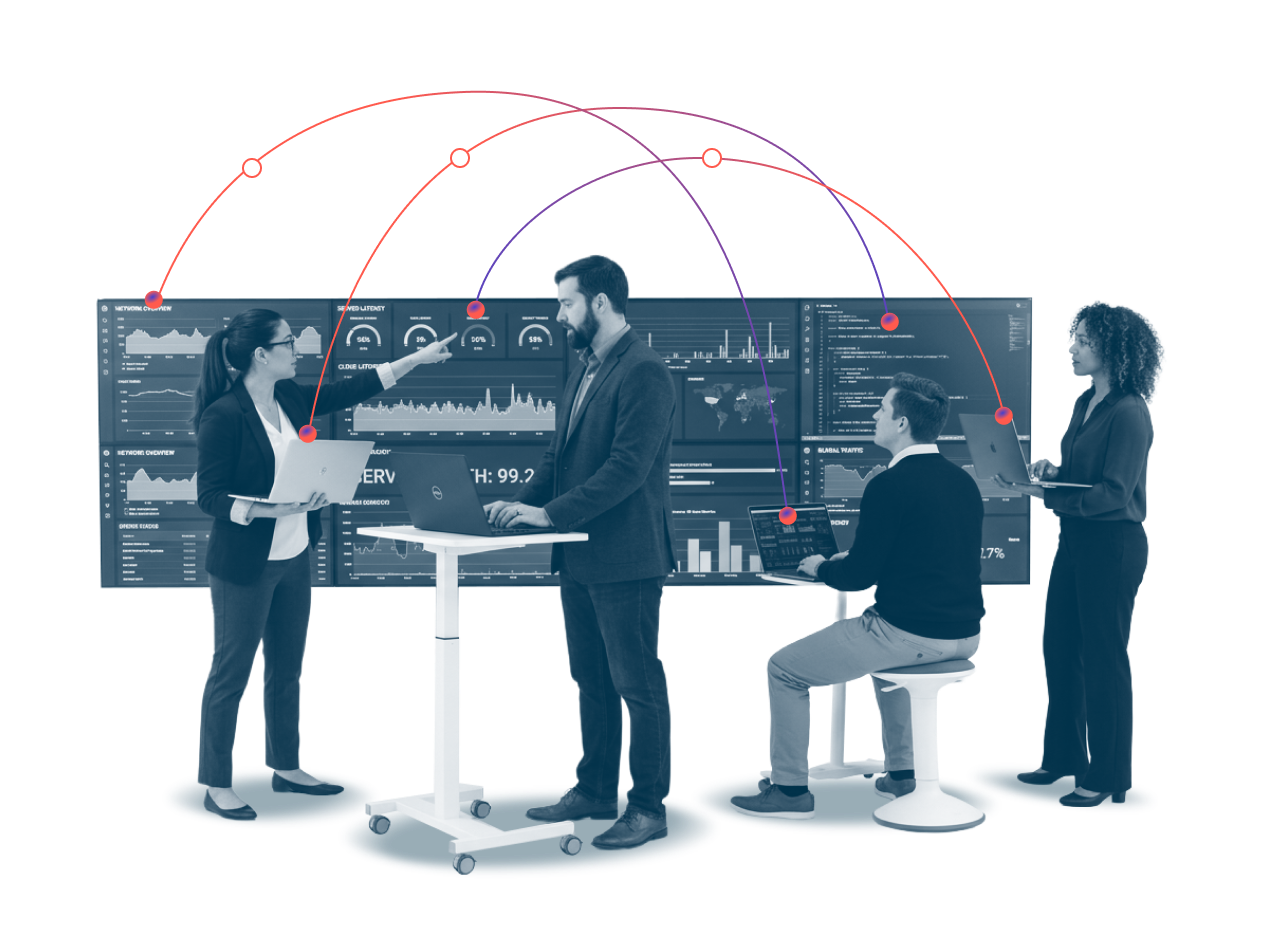
Teams don’t replace cron because it’s broken. They replace it because the business impact of failure becomes too high.
When evaluating alternatives, teams look for:
- Dependency-driven workflows
- Full visibility across systems
- SLA management and forecasting
- Automated recovery
- Secure file transfers
- Cloud and Kubernetes integration
- Governance and access control
Cron vs. Control-M — A Practical Comparison
Comparing cron with an enterprise workflow orchestration platform like Control-M can help clarify the differences in reliability, visibility, and cross-system automation.
| Capability | Control-M | Cron |
|---|---|---|
| Purpose | Enterprise workload automation & workflow orchestration | Native time-based scheduler per Unix/Linux host |
| Scope | Cross-platform orchestration across hybrid environments | Operates per individual Unix/Linux system |
| Architecture | Centralized control with server and agents | Decentralized; each host maintains its own crontab |
| Visibility | Unified monitoring, SLAs, and exception management | No built-in centralized monitoring across hosts |
| Dependencies | Native cross-system dependency management | Cross-host dependencies require custom scripting or external tools |
| Scheduling Logic | Calendars, rules, event triggers, SLA-aware scheduling | Time-based scheduling via crontab syntax |
| Error Handling | Built-in alerts, conditional workflows, automated reruns | Error handling must be implemented in scripts |
| Event Automation | Supports file, API, and application-triggered workflows | Primarily time-driven; event logic requires custom scripting |
| Resource Management | Resource-aware execution and workload coordination | No native workload coordination across systems |
| Enterprise Integrations | Prebuilt integrations for enterprise applications | No native enterprise application integrations |
Control-M vs Other Cron Alternatives
Control-M doesn’t replace every scheduler, it orchestrates them.
-
Systemd timers improve reliability on a single host. Control-M coordinates workflows across environments.
-
Kubernetes CronJobs schedule pods. Control-M manages processes that include Kubernetes.
-
Cloud schedulers trigger services. Control-M governs complete workflows across systems.
-
Data pipeline tools manage only data workflows. Control-M coordinates workflows across data, applications, file transfers, and infrastructure—giving teams a single view of all processes.
Why Teams Replace Cron with Control-M

From isolated jobs to connected workflows
Control-M models workflows as connected services, not standalone scripts, eliminating brittle chaining logic and reducing manual recovery effort.

SLA-driven automation
With Control-M, teams can define service levels, predict risks, and take corrective action before deadlines are missed.

Predictive forecasting and “what if” analysis
Control-M can simulate future workload execution, planned outages, resource constraints, and calendar changes to prevent incidents.

Policy-driven managed file transfer
Control-M replaces custom scripts with encrypted, policy-based file transfers and end-to-end tracking for compliance.
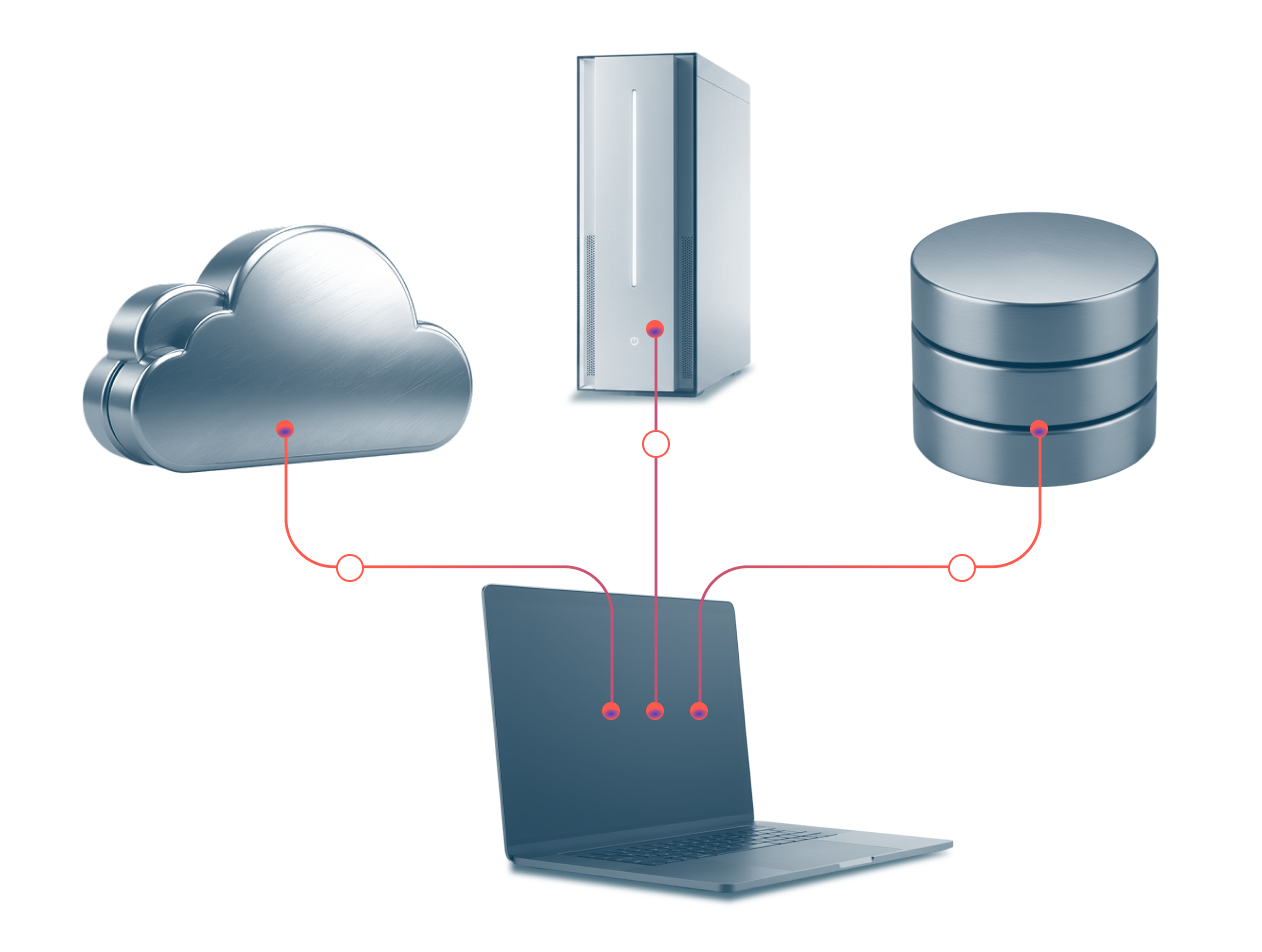
Kubernetes and cloud orchestration
Control-M coordinates containers, cloud services, data platforms, and on-prem systems in a single workflow.

Jobs-as-Code for DevOps teams
With Control-M, teams can define workflows as code using JSON or Python, manage them in Git, validate changes in their CI/CD pipeline, and promote reliably across environments—adding version control, governance, built-in validation, and controlled deployments from dev to production.
Common Use Cases Where Teams Replace Cron
Data pipeline orchestration
Automate workflows across multiple systems to prevent delays and maintain SLA compliance.
Financial batch processing
Ensure time-sensitive jobs run reliably without manual intervention.
Application release automation
Coordinate deployments across environments while reducing errors and downtime.
File transfers across partners and systems
Secure, policy-driven transfers with automated retries and audit trails.
Hybrid cloud workload orchestration
Manage jobs across cloud, containers, and on-prem systems from a single dashboard.
FAQs When Replacing Cron with Control-M
Is cron still relevant?

Why do enterprises replace cron?
Is Control-M just a cron replacement or something more?
How is Control‑M different from cron alternatives?
Can Control-M manage or replace existing cron jobs without disruption?
How does Control-M improve reliability and reduce failures compared to cron?
Is Control-M suitable for hybrid cloud and modern architectures?
How does Control-M support governance, auditability, and compliance?
What business value does Control-M deliver versus free or low-cost cron alternatives?
FAQs When Replacing Cron with Control-M
Is cron still relevant?
Why do enterprises replace cron?
Is Control-M just a cron replacement or something more?
How is Control‑M different from cron alternatives?
Can Control-M manage or replace existing cron jobs without disruption?
How does Control-M improve reliability and reduce failures compared to cron?
Is Control-M suitable for hybrid cloud and modern architectures?
How does Control-M support governance, auditability, and compliance?
What business value does Control-M deliver versus free or low-cost cron alternatives?






Control-M

Control-M provides agility and guarantee in the execution of processes. In my view, it is the company's most effective tool, processing all critical missions for clients. Any deviation, even if not due to Control-M, is capable of detecting it, making recovery much faster.
Jorge Suzano, Support Specialist at TIVIT
Information Technology & Services
201-500 employees
Control-M and the Present and the Future
Due to various integrations with different APIs, we have great possibilities for new products and solutions.
Rafael Modesto, Especialista Control-M at Cielo
Banking
1001-5000 employees
My Control-M review
A very effective tool for orchestration, routine automation, and extraction of compiled reports...
Erika Chamberlino, Analista at Bradesco Seguros
Banking
10,001+ employees
Control-M
Control-M is the best automation tool I've ever used on the market. Its versatility in connecting to many platforms helps with day-to-day work.
Verified Reviewer
Banking
5001-10,000 employees
Control-M Review
I use this tool daily and wouldn't consider using anything else.
Leonardo Bergamin, Estagiário em Analise de Produção at Bradesco S.A
Banking
10,001+ employees
Control-M Production Support
Simple to learn different functions in batch job scheduling and administrations. Efficiency in monitoring and trouble shooting.
Verified Reviewer
Business Supplies & Equipment
1001-5000 employees
Control-M Robert Mark Technologies
I have used the product for over 20+ years. It is the best.
George Thorn, Control-M Consultant at Robert Mark Technologies
Information Technology & Services
11-50 employees
Control-M: The Ultimate Tool for Workflow Management.
Control-M stands out in the workload automation space for its robust orchestration capabilities, especially in complex, hybrid IT environmentsActiveBatch: Known for its rich integrations and intuitive workflow desig
Verified Reviewer
Banking
10,001+ employees
Control-M Latest and Greatest
Enhanced Control-M Automation API continues to evolve to give customers all the control and ownership they need to accelerate application delivery.
Verified Reviewer
Banking
10,001+ employees
Grow UP with Business Automation - Control-M
To automate the daily BAU tasks so that we can save many number of MAN hours, at the same time to transfer any data securely the MFT control module plays a crucial role.
Venkata Ramesh Nalapati, Control-M Administrator at SAB
Banking
5001-10,000 employees
Control-M Automation at its best!
Without the use of Control-M's automation our IT Department would be tasked with executing multiple scripts/tasks all day and night. That would NOT be efficient!
Jamie Adelglass, Manager Business Intelligence Systems at BBU INC
Consumer Goods
10,001+ employees
The Control-M Review
Very stable product and very good Support Org.
Verified Reviewer
Insurance
501-1000 employees
Control-M workload automation has become an essential platform for our production activity
With Control-M we are able to monitor major part of our critical batches. Our production is optimized and execution planning is shared with all stakeholders.
Verified Reviewer
Facilities Services
10,001+ employees
The best for visibility
We use Control-M to automate tasks on a schedule. This product has given us a central place to monitor jobs visually instead of going to each server to monitor Windows Scheduled tasks. This also lets non-admins run jobs as a self-service as well as be able to load balance tasks and Control-M servers.
Verified Reviewer
Utilities
501-1000 employees
Happy with Control-M
It’s well suited for what it’s designed for: workload automation. Honestly, it excels at this. Head and shoulders above other tools out there in my opinion.
Verified Reviewer
Utilities
1001-5000 employees
Loving Control-M for 24 years and counting
Loving Control-M for 24 years and counting
Verified Reviewer
Information Technology & Services
10,001+ employees
Loving Control-M for 24 years and counting
Cost Savings - by automating manual tasks we're able to reduce man-hours and be more accurate
Verified Reviewer
Information Technology & Services
10,001+ employees
Excellent tool. Stable, resilient, user-friendly interface, but needs to evolve mainly in AI data analysis.
Everything goes through Control-M. Today, we execute over 200,000 jobs in Control-M. Besides being impossible to execute this manually, Control-M prevents operational errors.
Verified Reviewer
Financial Services
1001-5000 employees
BMC Control-M
Control-M is used for job automation and coordination across many multiple applications and infra environments globally. This ensures dependencies are addressed, allows quick notification on failure and pinpoints where that failure is, and ensures jobs can be re-run when needed
Verified Reviewer
Entertainment
10,001+ employees
BMC Control-M
Allowed single automation platform rather than multiple team dependent or location dependent tools
Verified Reviewer
Entertainment
10,001+ employees
Control-M is the BEST!
I have worked with other job schedulers and Control-M had led the market since its introduction. The user-friendly GUI not only provides ease of use for the users, but also for the support teams.
Verified Reviewer
Insurance
501-1000 employees
My Review of Control-M
Control-M by far is the leader in this industry. The ease of use of the product and the ability to get others up to speed on using the product because of this is great.
Verified Reviewer
Hospitality
10,001+ employees
Control-M Review
Previously we used to run our workload in CA workload automation but it was not implemented right, then we decided to have a more robust tool with a good partner for implementation.
Rafael Ferreira da Silva, Solution Architect at Banpara
Banking
1001-5000 employees
Control-M is still the future!
Control-M is still the future!
Verified Reviewer
Information Technology & Services
51-200 employees
Review of Control-M in DSP
Control-M has given us the benefit of working with external agencies through its managed file transfer system. This has enabled us to work beyond our previous scope of work and brought the ability to bring us to the next level.
Pat Byrne, Higher Executive Officer at Dept Social Protection
Government Administration
5001-10,000 employees
Best workload automation tool on the market.
I started working with Control-M in 1996, and even though I stepped away from it for 10 years, I have seen continuous improvements. While checking the market for alternatives to Control-M, I have seen that there is nothing comparable.
Verified Reviewer
Furniture
10,001+ employees
Bank run on Control-M
Control-M has excellent features to integrate with other applications via Control Modules.
Verified Reviewer
Banking
10,001+ employees