Let us know how we can help
Sales & Pricing
Speak to a rep about your business needs

Help & Support
See our product support options
General inquiries and locations
Contact us


Supply Chain Automation & Orchestration for End-to-End Reliability
Coordinate planning, execution, and data across systems to keep supply chain workflows reliable, resilient, and predictable in changing environments.
Why Supply Chain Automation Still Fails at Scale
Even in fast-moving automated supply chains, workflows often still run across disconnected systems and partners without consistent orchestration or oversight.
This fragmentation lets a single upstream issue cascade downstream, causing missed SLAs, delayed shipments, and constant operational firefighting.
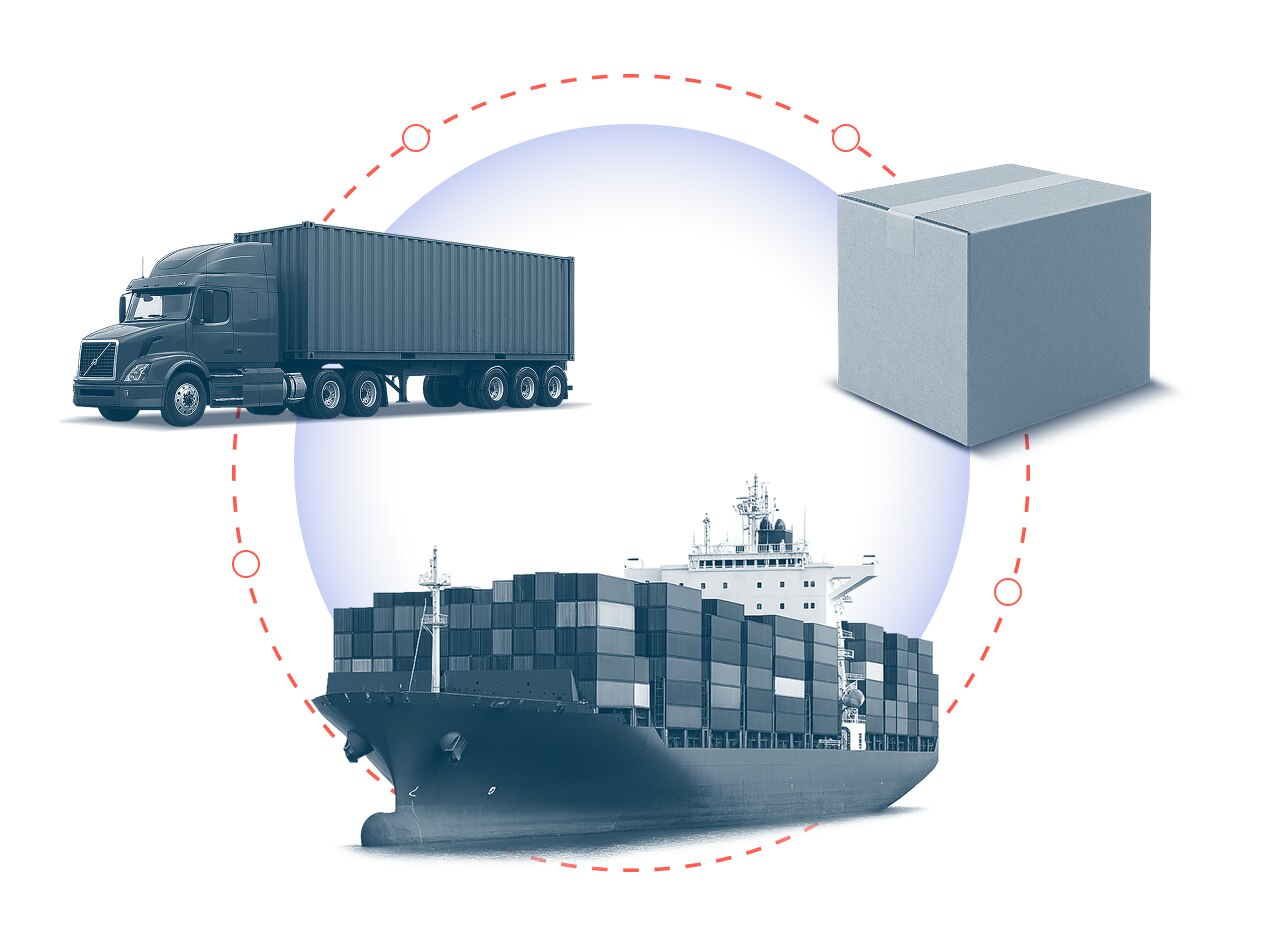
What This Looks Like in Real Operations
A supplier shipment is delayed by several hours. That single disruption triggers a chain reaction across the supply chain.
-
Shipment Delay
Late or changed inbound delivery
-
Inventory Gap
Stock not received, availability misaligned
-
Fulfillment Disruption
Orders delayed, backorders created
-
Transport Rework
Missed loads, rescheduling, expediting
-
Customer Impact
Missed delivery dates, SLA risk, escalations
Takeaway : Without coordination across systems, teams react too late—and often manually—after downstream impact has already occurred.
Supply Chain Automation vs. Orchestration
Supply chain automation is about getting individual tasks done faster and more reliably—things like processing orders, updating inventory, or moving data between systems without human intervention.
Supply chain orchestration is about making sure all of that automated work happens in the right order, at the right time, and for the right reason—across systems, teams, and trading partners.
This matters most when supply chains stop running on assumptions and start running in practice. True supply chain orchestration means:
- Work starts when prerequisites are actually met, not when the schedule says they should be
- Dependencies are enforced by the system, rather than managed through emails, spreadsheets, or tribal knowledge
- Problems surface early, before a small delay turns into a missed shipment or production shortfall
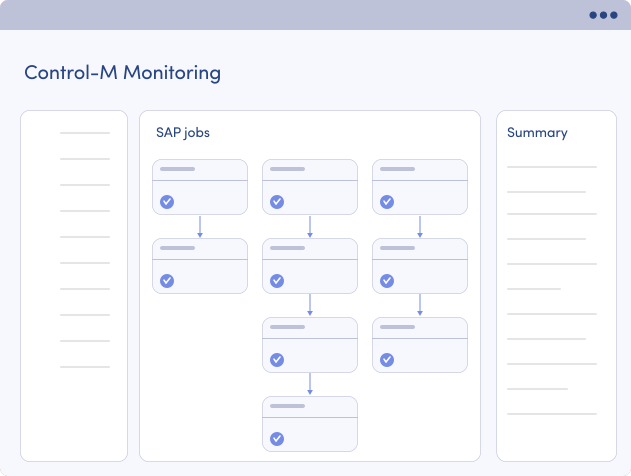
The Role of Orchestration in Modern Supply Chains
Orchestration connects systems, data, and workflows so supply chain operations run in the right order, adapt to real conditions, and stay coordinated across dependencies, exceptions, and systems.
Takeaway: Orchestration turns automation into reliable, scalable execution.
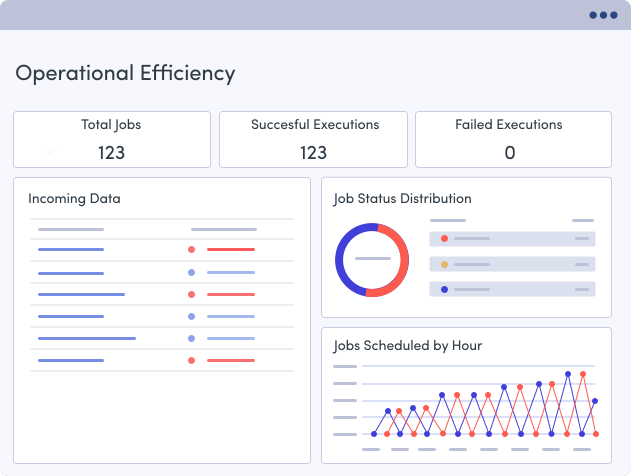
How Orchestration Impacts Supply Chain KPIs
Orchestration directly improves core supply chain performance metrics by making processes more reliable and better coordinated:
-
On-Time, In-Full (OTIF)
Ensure orders are fulfilled based on real-time readiness
-
Order Cycle Time:
Reduce delays caused by manual coordination and rework
-
Inventory Turns:
Align replenishment with actual demand signals
-
Service Levels:
Maintain consistent performance even during disruptions
-
Operational Efficiency:
Reduce manual intervention and exception handling
Supply Chain Automation Pitfalls Not Fit for Scale
Most organizations rely on a mix of tools. Each plays a role—but introduces limitations at scale.
Embedded ERP Schedulers
Work well for managing workflows within ERP environments, but break down when visibility and coordination are needed across external systems and partners.
Custom Scripts and Integrations
Great for solving targeted automation gaps quickly, but often become fragile, hard to scale, and difficult to govern over time.
Point Automation Tools
Strong for automating specific tasks like file transfers and APIs, but unreliable when execution is siloed and disconnected from upstream and downstream dependencies.
Enterprise Workload Automation Platforms
Fit for managing large-scale batch processing, but often remain IT-centric and limited in their ability to orchestrate real-time, cross-system business workflows.
Supply Chain Automation Solution Comparison—At a Glance
Below is a comparison of common solution types and how they differ in scope, scalability, and orchestration capability.
| Capability | ERP Schedulers | IPaaS | RPA | Custom Scripts | Workflow Orchestration (Control-M) |
|---|---|---|---|---|---|
| End-to-end orchestration |  |  | | |  |
| Cross-system dependency management | | | | | |
| Event-driven + batch support | | | | | |
| Real-time visibility | | | | | |
| Scalability across partners | | | | | |
| Built-in recovery | | | | | |
Takeaways:
- ERP schedulers manage tasks within a single system
- iPaaS platforms focus on API-level integration
- RPA tools automate repetitive user interactions
- Custom scripts solve isolated problems quickly
- Workflow orchestration platforms like Control-M unify all of these—providing a single layer that coordinates systems, data, and processes end to end.
Learn more about enterprise workflow orchestration platforms
The Best Supply Chain Orchestration Solution Capabilities
Leading platforms go beyond task automation to enable full process orchestration:
End-to-End Orchestration
Coordinate workflows across applications, data pipelines, and partner systems
Event-Driven Execution and Dependency Management
Ensure processes run based on real conditions and correct sequencing
Real-Time Visibility
See workflow status, risks, and performance across the entire supply chain
Built-In Failure Handling
Detect and resolve issues automatically before they escalate
Scalability Across Ecosystems
Support global operations and partner networks without fragmentation
Governance and Auditability
Maintain compliance, traceability, and control across all workflows
Takeaway: Solutions that lack these capabilities often automate faster failures rather than prevent them.
Questions to Ask When Evaluating Providers of Supply Chain Automation
When selecting a supply chain automation solution, you can use these questions to better understand vendor capabilities and limitations.
| Evaluation Area | Key Questions to Ask Vendors |
|---|---|
| End-to-End Orchestration | Can your platform coordinate workflows across ERP, cloud, SaaS, and partner systems? How does it manage dependencies between data pipelines and operational processes? |
| Event-Driven and Real-Time Execution | Does the solution support both scheduled and event-driven execution? Can it trigger workflows automatically based on upstream events or exceptions? |
| Visibility and Monitoring | What level of real-time visibility does the platform provide across workflows? How are failures, delays, or exceptions surfaced to operations teams? |
| Failure Handling and Recovery | Does the platform automatically detect and recover from failures? How does it prevent downstream impact when a process fails? |
| Scalability and Hybrid Support | Can it scale across multiple regions, business units, and partner ecosystems? How does it handle hybrid environments (on-prem, cloud, SaaS)? |
| Governance, Security, and Compliance | What audit trails and reporting capabilities are built in? How does the platform enforce security and governance across workflows? |
| Time-to-Value and Integration | How long does implementation typically take for enterprise-scale operations? What support exists for integrating with existing planning, logistics, and analytics systems? |
| Proven Outcomes | Can the vendor provide examples of reduced operational risk, faster recovery, or improved SLA adherence? Are there case studies relevant to similar-sized or industry-specific supply chains? |
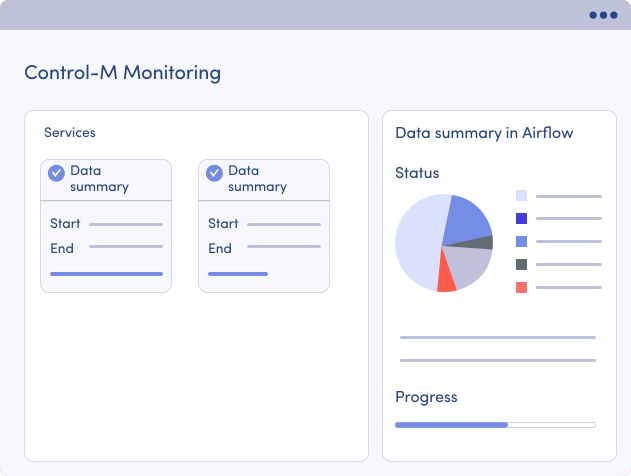
Why Teams Standardize on Control-M for Supply Chain Automation
Control-M enables teams to:
-
Orchestrate workflows end-to-end across ERP systems, cloud platforms, data pipelines, APIs, and business applications
-
Manage complex dependencies in real time with centralized visibility, alerts, and proactive issue detection
-
Ensure reliable, SLA-driven execution of processes with automated recovery and error handling
Takeaway : Rather than adding another tool, Control-M acts as a unifying orchestration layer—bringing consistency, predictability, and control to distributed operations.
What Organizations Using Control-M Commonly Report
More customer stories30–50%
reduction in manual intervention across workflows through end-to-end automation and orchestration
90–95%
Up to 90–95% SLA adherence by proactively managing dependencies and ensuring timely execution
50–70%
faster recovery from upstream failures with automated error handling, alerts, and rerun capabilities
2–3x
improvement in operational resilience during peak demand, enabling consistent performance during high-volume periods
Top Supply Chain Orchestration Use Cases with Control-M
Order-to-Cash Automation
Automate your entire order-to-cash flow—from order validation to invoicing and fulfillment—so orders move faster, errors drop, and customers get what they need on time.
Inventory Management and Replenishment
Keep inventory aligned to demand by automatically monitoring stock levels and triggering replenishment before you run into shortages or excess.
Supplier Integration and Data Exchange
Connect seamlessly with suppliers and systems like SAP to automate purchase orders, shipment updates, and forecasts—so you eliminate manual handoffs and always have a clear, current view.
Production Planning and Scheduling
Synchronize demand, capacity, and resources in one automated flow to keep production on schedule and avoid costly delays or bottlenecks.
Logistics and Shipment Tracking
Track shipments end-to-end with real-time updates across carriers and warehouses, so you can quickly spot delays and keep deliveries on track.
How Companies Improved Supply Chain Operations with Control-M
Teams use Control-M to keep orders moving, stay ahead of disruptions, and connect everything across systems and partners so nothing falls through the cracks.
Keeping Supply Chains Running Through Disruption
Companies like Hershey and Colruyt use Control-M to keep critical supply chain processes in sync across ERP and cloud systems—so when disruptions happen, teams can respond earlier and avoid downstream impact.
View mini-case study
Real-Time Visibility for Supply Chains
Railinc uses Control-M to keep large volumes of operational data flowing on time—so teams can track assets, spot issues earlier, and make decisions based on current information across the rail network.
View mini-case study
Scaling Supply Chains Without More Headcount
Ingram Micro uses Control-M to manage over 900,000 supply chain transactions across orders, invoicing, warehousing, and logistics—helping a small team run high-volume operations efficiently and reliably.
View mini-case study
Analyst Report
See why BMC is named a Leader in this Gartner® report
2025 Magic Quadrant™ for Service Orchestration and Automation Platforms
Supply Chain Orchestration FAQs
Do we have to rip and replace anything—or can Control-M connect and orchestrate what we already have?

How does Control-M help our team respond quickly to supply chain events and issues?
How quickly can we start using Control-M for supply chain tasks?
What kind of support does Control-M provide if something goes wrong?
Supply Chain Orchestration FAQs
Do we have to rip and replace anything—or can Control-M connect and orchestrate what we already have?
How does Control-M help our team respond quickly to supply chain events and issues?
How quickly can we start using Control-M for supply chain tasks?
What kind of support does Control-M provide if something goes wrong?
